

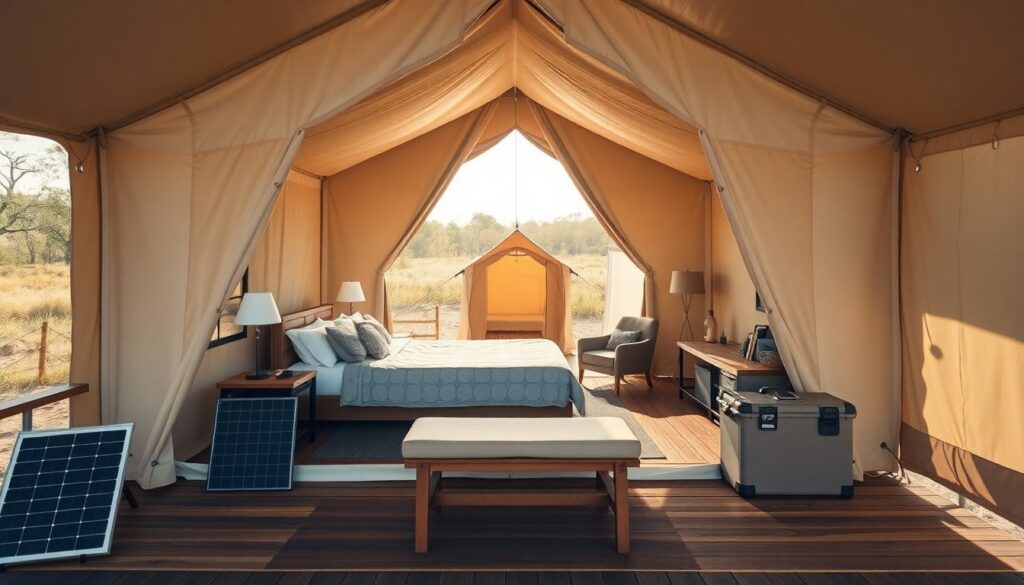
A luxury glamping tent gives guests the comfort of a hotel and the freedom of the outdoors. This guide explains how to pick a luxury glamping tent, what features matter, and how to set one up for a safe, comfortable stay. It keeps advice direct and actionable so readers can make fast, confident choices.
Key Takeaways
- A luxury glamping tent combines high-end comfort with outdoor access, featuring spacious interiors, quality materials like canvas or polycotton, and room-like elements such as wooden floors and full-size beds.
- Choosing the right size and structure matters; match the tent to guest needs, plan layouts to maximize comfort, and ensure high-quality seals and insect screening for a pest-free stay.
- Essential features include quality bedding, power options like solar panels or generators, climate control with heaters or fans, and bathroom solutions ranging from portable units to plumbed ensuite facilities.
- Site selection should focus on flat, well-drained ground with proper orientation to reduce wind impact, while setup requires organized logistics and thorough testing of all components.
- Regular maintenance, including cleaning, checking seams and fittings, and storing the tent properly, extends its lifespan and minimizes downtime, ensuring a consistently luxurious glamping experience.
What Defines A Luxury Glamping Tent? Key Styles And Materials
A luxury glamping tent blends high-end comfort with outdoor access. Buyers often expect spacious interiors, quality finishes, and durable fabrics. Canvas and polycotton remain common because they breathe and last under varied weather. Ripstop nylon suits lightweight, portable models that still offer premium fittings. A luxury glamping tent often features wooden floors, full-size beds, and large windows. These elements create a room-like feel and raise guest comfort.
Design styles vary. Safari-style tents use straight walls and high peaks for space and views. Bell tents use a central pole and curved walls for a cozy feel. Yurt-style tents use radial frames for a circular layout and good insulation. A luxury glamping tent may mix these styles with framed porches or decks to add outdoor living space.
Buyers should inspect zippers, stitching, and seam sealing. High-quality seams reduce leaks and drafts. Look for weather-rated options with UV protection and mold-resistant treatments. A luxury glamping tent with reinforced stress points stays functional through seasons and guest turnover. Materials that balance durability and comfort deliver the best long-term value.
Choosing The Right Tent: Size, Structure, And Layout Considerations
The buyer should match tent size to guest needs. A luxury glamping tent for two needs less floor space than a family unit. The buyer should list expected occupancy and storage needs first. Next, the buyer should consider the structure. Frame tents use poles and anchors for fast setup and stable walls. Pole tents reduce internal hardware and create open ceilings. The buyer should weigh transport and setup time against on-site comfort.
A luxury glamping tent must plan for layout. Place sleeping areas away from doors to reduce drafts. Add a small sitting area near windows to maximize light and views. Storage zones help keep the interior tidy and protect linens. A tent with modular partitions lets operators convert spaces for couples or families.
The buyer should test door and window seals and check for insect screening quality. A well-sealed luxury glamping tent reduces noise and keeps pests out. The buyer should also confirm repair part availability. Tents with common-sized poles and standard fittings prove easier to fix in remote locations.
Essential Features: Comfort, Power, Climate Control, And Bathroom Options
Comfort matters. A luxury glamping tent should include a quality mattress, layered bedding, and blackout curtains. These items improve sleep and guest satisfaction. Power matters. Operators should plan power for lighting, charging, and small appliances. Solar panels with battery storage offer an off-grid option. A generator provides steady power for larger needs. The operator should size power systems based on peak loads.
Climate control matters. Electric heaters work well in cold seasons. Propane heaters provide high heat without heavy power demands. Fans and passive ventilation keep summer nights comfortable. A luxury glamping tent with insulated walls and floor reduces energy use and improves comfort.
Bathroom options matter. Portable luxury bathrooms use composting toilets or sealed chemical units and private tents. Plumbed bathrooms connect to septic or municipal lines and offer a hotel-like experience. Operators should follow local codes for wastewater and sanitation. A luxury glamping tent with attached ensuite or nearby eco-bathroom increases nightly rates and guest reviews. Nova Scotia operators setting up seasonal glamping sites can also use storage units Dartmouth to keep off-season tent components, bedding, and equipment secure and protected between operating seasons.
Site Selection, Setup Logistics, And Maintenance Tips For A Seamless Stay
Site selection affects guest experience and tent longevity. Choose flat ground with good drainage to avoid pooling water. Place a luxury glamping tent on a slight slope or raised deck to shed rain. Avoid low spots that collect runoff. Check local wind patterns and orient the tent to reduce wind load on seams and porch areas.
Setup logistics matter. Plan for transport of the luxury glamping tent, frame components, and flooring. Use a checklist for anchors, guy lines, and tools to speed assembly. The crew should set up tents on dry ground and test all zippers, vents, and seams before guests arrive. Operators should record setup steps and make a small maintenance log for each unit.
Maintenance tips improve lifespan. Clean canvas after each season and treat mildew promptly. Re-tension guy lines and check pole fittings monthly during heavy use. Replace worn zippers and patch fabric rips quickly to prevent larger damage. Store a luxury glamping tent in a dry, ventilated space when not in use. Keep spare parts and a basic repair kit on site to handle common fixes and reduce downtime.
