

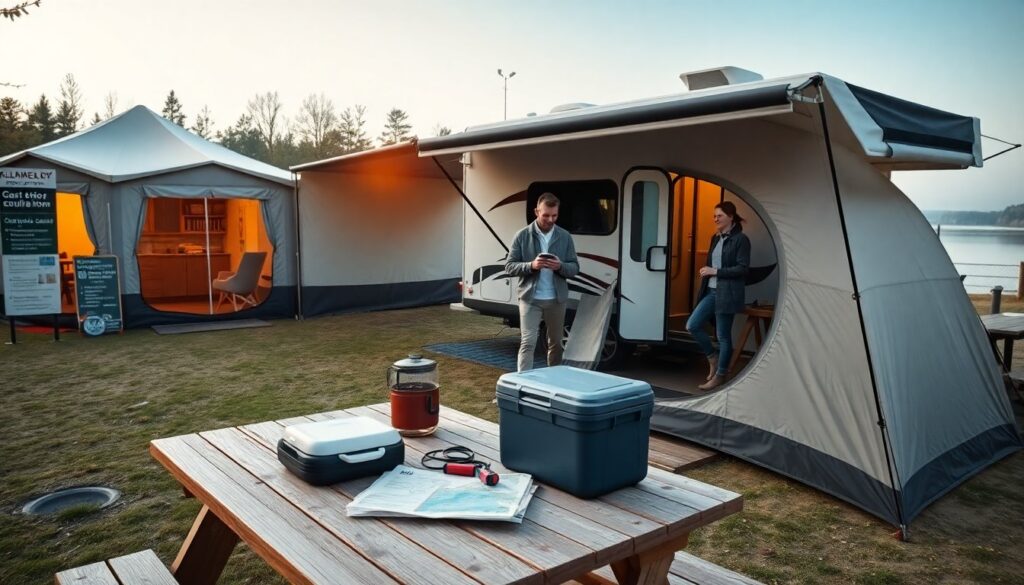
Camping near Niagara Falls draws visitors who want nature and easy access to the falls. This guide lists top campgrounds, explains tent, RV, and glamping choices, and details what to pack for each season. It gives clear, practical advice for first-timers and repeat campers. The reader will learn where to reserve, what fees to expect, and how to plan time at the falls.
Key Takeaways
- Camping near Niagara Falls offers diverse options including tent sites, RV hookups, and glamping units within 30 minutes of the falls on both US and Canadian sides.
- Reservations for popular campgrounds fill quickly, especially in summer; book at least two months in advance and confirm arrival procedures to avoid issues.
- Choosing between tent camping, RV, or glamping depends on comfort needs, budget, and proximity preferences to the falls and local transit.
- Pack gear suited for wet and variable conditions like waterproof footwear, layered clothing, and warming sleeping bags, especially for spring, fall, and winter stays.
- Be prepared with needed permits, identification, and printed reservation confirmations, especially when crossing the US-Canada border during your camping trip near Niagara Falls.
- Consider campground features such as hookups, pet rules, quiet hours, and accessibility to plan a safe, comfortable, and enjoyable camping experience near Niagara Falls.
Top Campgrounds Within 30 Minutes Of The Falls
Camping near Niagara Falls has several close options on both the U.S. and Canadian sides. Each site offers a different mix of services and distance to the falls. The choice shapes how the visitor spends time at the park and in town.
Robert Moses State Park Campground sits about 10 minutes from the U.S. side of the falls. The campground offers tent sites, RV hookups, and a short walk to the river and picnic areas. Staff keep sites clean. The visitor can drive to Goat Island in 15 minutes. This site fills fast in summer.
Niagara Falls State Park has no large campground, but nearby private parks and RV resorts offer shuttle access to the park. These private parks often supply full hookups and family activities. They charge higher fees in July and August.
On the Canadian side, Niagara West Campground lies within 20 to 30 minutes of downtown Niagara Falls, Ontario. The campground offers shaded sites and easy highway access. The traveler can reach major attractions and the falls in under half an hour.
Smaller county and provincial parks sit within a short drive. These parks provide quieter settings and lower fees. They often lack on-site stores and require a drive for supplies.
Campground Features, Reservations, And Fees
Campgrounds list features on their websites. The visitor should check for hookup type, shower availability, picnic tables, fire rings, and pet rules. Many sites offer Wi-Fi. The camper should confirm generator hours and quiet hours.
Reservations open at varied times. State and provincial parks use online booking systems. Private parks use their own reservation pages or third-party sites. The visitor should reserve at least two months in advance for summer weekends. For holiday weekends, book earlier.
Fees vary by season and site type. Tent sites cost less than RV sites with full hookups. Glamping units cost more but include linens and lights. Some parks charge vehicle fees or park entry fees. The camper should read cancellation policies and note any extra taxes.
The visitor should carry printed reservation confirmations. The camper should arrive during office hours to check in. If the camper needs late arrival, the camper should call the office ahead of time to confirm a late check-in process.
Choosing The Right Camping Style: Tent, RV, Or Glamping
Camping near Niagara Falls fits several budgets and comfort levels. The visitor should match style to needs and to travel plans.
Tent camping suits hikers and budget travelers. A tent site places the camper near nature. The camper should choose a flat, shaded site. The camper should use a ground tarp and a quality sleeping pad. Tents do best when protected from wind and rain. The camper should expect cooler nights in spring and fall.
RV camping suits travelers who want comfort and mobility. RV sites often include water, sewer, and electrical hookups. The RV driver should check site length and turn radius before booking. The RV user should test hookups before nightfall. The RV provides a safe place to store gear and to dry clothing after a wet day at the falls.
Glamping suits travelers who want a hotel-like stay in nature. Glamping units provide beds, heat, and sometimes private bathrooms. The glamping guest gains comfort and saves time on packing. Glamping units cost more, but they remove setup and teardown tasks.
The visitor should weigh distance to the falls. A tent camper can trade convenience for saved money. An RV camper can choose a site closer to the falls for shorter travel times. The glamping guest should check noise rules and event scheduling: some sites host live music or group events.
The camper should plan travel logistics. If the group plans to use local transit, the camper should select campgrounds near bus routes or shuttle stops. If the group plans to drive into the falls area, the camper should account for parking fees and timed-entry requirements at popular lookout points.
What To Pack And Seasonal Considerations
Camping near Niagara Falls requires gear for spray, wind, and changing weather. The camper should prepare for wet conditions near the falls and for temperature swings at night.
Essentials include a sturdy tent or shelter, layered clothing, rain gear, and waterproof footwear. The camper should pack a warm sleeping bag rated for the expected low temperature. The camper should carry a compact stove, fuel, a lighter, and a small first-aid kit. The camper should bring a water filter or water treatment tablets if planning to use natural sources.
For summer stays, the camper should bring sunscreen, insect repellent, and a hat. The camper should pack quick-dry shirts and shorts. Summer nights may still feel cool near the river, so the camper should bring a light jacket.
For spring and fall, the camper should pack a warmer sleeping bag and layers. The camper should bring insulated boots and a beanie. The camper should expect rain and pack a waterproof outer layer.
For winter camping, the camper should carry a four-season tent or use insulated glamping units. The camper should bring a sleeping bag rated for low temperatures and a sleeping pad with high R-value. The camper should check road and park conditions and confirm winter access before traveling.
Food and safety notes: Store food in a locked vehicle or bear box where provided. The camper should use a sealed container for scented items. The camper should keep a flashlight, extra batteries, and a power bank. The camper should monitor weather forecasts and trust park alerts.
Packing for the trip also means packing permits and ID. The camper should bring reservation confirmations, vehicle registration, and an accepted form of ID for cross-border travel if the traveler plans to cross between the U.S. and Canada. The camper should verify border requirements before departure.
