

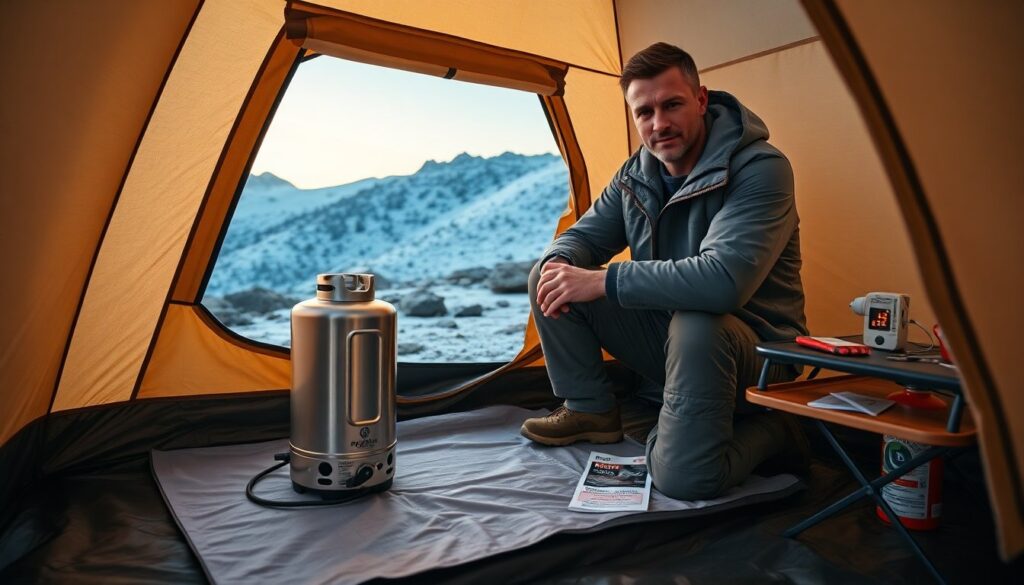
A portable camping heater for tent use must heat reliably and run safely. This guide explains how these heaters work, how to size them for a tent, and how to use them safely. The reader will learn fuel options, key features, and setup tips. The goal is to help the reader pick a heater that fits the tent, the trip, and the safety needs.
Key Takeaways
- A portable camping heater for tent use must be sized correctly by calculating tent volume and choosing a heater with 10–20% more BTU output than needed for optimal warmth.
- Safety is critical: always ensure proper ventilation, use a battery-powered CO alarm, and choose heaters with features like automatic shutoff and low oxygen sensors.
- Select the fuel type based on trip conditions; propane offers high output and cold-weather performance, while electric heaters eliminate combustion risks but need power.
- Setup heaters on flat, noncombustible surfaces with clear space around them and near tent vents to ensure fresh air circulation and prevent hazards.
- Consider key features such as portability, runtime, ignition type, thermostat controls, and safety protections when buying a portable camping heater for tent use.
- Maintain your heater by cleaning vents, inspecting seals, testing safety features, and storing fuel and equipment properly after each season.
How Portable Camping Heaters Work — Types and Pros/Cons
Portable camping heaters for tent use convert fuel or electricity into heat. A propane radiant heater burns propane and sends infrared heat to objects. A catalytic heater uses a flameless chemical reaction to make heat. A butane heater functions like a small gas heater with a visible flame. An electric heater converts grid or battery power to heat through resistive elements. Propane gives fast heat and high BTU but needs ventilation. Catalytic heaters run quietly and use less oxygen but give lower peak heat. Electric heaters avoid combustion risks but need power supply and may be slow to warm a cold tent.
Sizing, BTU Needs, and How to Match a Heater to Tent Volume
A user must match heater output to tent volume. First, measure tent floor area and ceiling height to get cubic feet. Multiply area by height to get tent volume. A simple rule uses 10 BTU per cubic foot for cold conditions and 5–7 BTU per cubic foot for mild weather. For a 10×10 tent with 6.5-foot height, use about 650 BTU for mild nights and 1,300 BTU for cold nights. Manufacturers list heater BTU output and recommended square footage. The buyer should choose a portable camping heater for tent use whose BTU rating exceeds the calculated need by 10–20% to cover heat loss from vents and zippers.
Safety Essentials: Ventilation, Carbon Monoxide, And Built‑In Protections
A person must always ensure ventilation when using a portable camping heater for tent use. Combustion consumes oxygen and can produce carbon monoxide. A battery-powered CO alarm must run in the tent anytime a fuel heater runs. The tent should have a vent or slight opening to allow fresh air. A heater with automatic shutoff for tip-over, low oxygen sensor, and overheating cutout reduces risk. The user must keep flammable materials and sleeping bags away from the heater, and must never leave the heater running unattended while occupants sleep or leave the tent.
Best Fuel Types for Tent Use: Propane, Catalytic, Butane, and Electric
Propane works well outdoors and at higher output. Small 1 lb cartridges fit many portable camping heater for tent models. Propane performs in cold temperatures better than butane. Butane cartridges are lighter and cheaper but lose pressure in very cold weather. Catalytic heaters use a platinum-coated element and run on low-pressure gas. They burn without a visible flame and give steady, low-level heat. Electric heaters remove combustion risk and suit situations with power access or battery systems. A user should pick fuel based on trip length, temperature, weight limits, and camp rules about open flames.
Setup Tips for Safe, Efficient Use Inside a Tent
Place the portable camping heater for tent use on a flat, noncombustible surface. Keep a three-foot perimeter clear of gear and fabric. Position the heater near a vent or door to allow fresh air to enter. Secure fuel canisters upright and inspect seals before lighting. Light the heater outdoors when the model requires pre-ignition checks, then move it into the tent if the manufacturer allows indoor tent use. Use a temperature controller or thermostat to avoid overfiring. The user should also carry a compact CO alarm, a fire extinguisher rated for fuel fires, and a plan to shut off fuel quickly.
Key Features To Look For When Buying (Portability, Runtime, Ignition, Thermostat)
A buyer should weigh portability, runtime, ignition type, and control options when choosing a portable camping heater for tent use. Portability includes weight, footprint, and weight of fuel canisters. Runtime depends on fuel capacity and BTU output: manufacturers list estimated hours at low and high settings. Push-button or piezo ignition avoids carrying matches. Electronic ignition saves effort but uses batteries. A built-in thermostat or multiple heat settings improves comfort and conserves fuel. Look for tip-over protection, low-oxygen shutoff, and easy-to-read fuel gauges. Check size and weight against pack limits and tent layout.
Maintenance, Troubleshooting, and Winter Storage Advice
A person must clean and inspect a portable camping heater for tent use after each season. Remove dust, soot, and insect nests from vents and burners. Check hoses, fittings, and seals for cracks or rust. Test ignition and safety sensors before a trip. If a heater sputters or smells strongly of fuel, stop use and service the unit. Store propane and butane cylinders per local rules: keep cylinders upright and away from heat. For catalytic and electric models, store in a dry place and protect electronic parts from moisture. Replace batteries annually and label the last service date.
